Jumping Spiders That Mimic Ants to Escape Predators
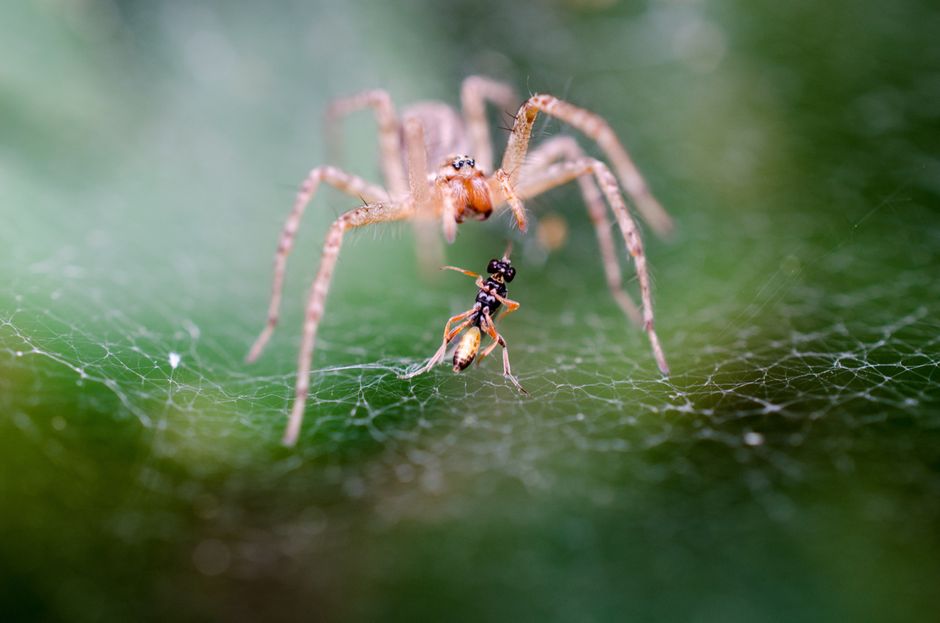
In the intricate world of arthropods, survival often hinges on subtle deceptions. Among the most fascinating examples are jumping spiders that have evolved to mimic ants. These arachnids, belonging to the family Salticidae, have developed remarkable adaptations in both appearance and behavior that allow them to resemble their hymenopteran neighbors. This form of mimicry, known as myrmecomorphy, serves as a sophisticated strategy to evade predators and sometimes to approach prey. By examining the mechanisms and implications of this adaptation, we gain insight into the selective pressures that shape evolutionary trajectories.
Ants are generally unpalatable or dangerous to many predators due to their aggressive defensive behaviors, strong mandibles, and chemical defenses such as formic acid. Consequently, predators learn to avoid them. Jumping spiders that resemble ants capitalize on this learned aversion. By mimicking ants, these spiders reduce their risk of being attacked by predators that would otherwise prey on them. Moreover, some ant-mimicking jumping spiders may also deceive ants themselves, allowing the spiders to move within ant colonies or approach ant prey without raising alarm. This dual advantage highlights the complexity of mimicry as a survival tool.
The following sections delve into the specific anatomical, behavioral, and ecological aspects of this remarkable strategy, illustrating how these spiders have fine-tuned their mimicry to thrive in their respective habitats.
Anatomical Adaptations for Ant Mimicry
The physical transformation of certain jumping spiders into ant lookalikes involves a suite of morphological modifications. To begin with, the body shape is altered to resemble the three-part structure of an ant: head, thorax, and abdomen. In many ant-mimicking species, the spider’s abdomen is constricted at the base to create a narrow waist, mimicking the petiole of ants. Some species even develop elongated, thin legs that are reminiscent of ant legs, and they may use their front legs to imitate the antennae of ants by holding them up and waving them.
Coloration is another critical component. Many ant-mimicking jumping spiders adopt the dark, shiny hues typical of ants, which effectively camouflages them against predators that rely on visual cues. In some cases, the spiders even have patterns that mimic the segmentation of an ant’s body, further enhancing the illusion. Additionally, the size of these spiders is often similar to that of the ant species they imitate, which is essential for the mimicry to be convincing. The precise tuning of these morphological traits indicates that natural selection has favored individuals whose appearance most closely matches the local ant fauna.
It is important to note that ant mimicry is not a static trait; it varies among species and populations. Some jumping spiders mimic a single ant species, while others may resemble multiple ant species or even different castes of the same species. This flexibility suggests that the mimicry is shaped by the specific ecological context, including the types of predators and ant species present in the environment.
Behavioral Mimicry: Movement and Interaction
Beyond their physical resemblance, ant-mimicking jumping spiders also imitate ant behavior to enhance the deception. One of the most striking behavioral adaptations is the way they move. Ants typically walk with a characteristic zigzag or erratic pattern, while jumping spiders have a more direct and jerky locomotion. Mimicking species often adopt an ant-like gait, with alternating leg movements that produce a similar ambling motion. They also wave their front legs in a manner reminiscent of ant antennae, which is a key visual cue for predators.
In addition to locomotion, these spiders may engage in ant-like interactions, such as touching antennae with other individuals or even joining ant trails. Some species have been observed to mimic the alarm behavior of ants by running in a frantic, chaotic manner when disturbed. This behavioral repertoire is not innate; it appears to be learned through experience and fine-tuned to match the specific ant species they cohabit with.
The level of behavioral mimicry can be so convincing that the spiders may be accepted into ant colonies, allowing them to feed on ant brood or other resources without being attacked. However, this approach carries risks, as ants have sophisticated chemical communication systems that may eventually expose the intruder. Nonetheless, the behavioral mimicry serves as an additional layer of protection, complementing the morphological adaptations.
Predator Avoidance and the Role of Mimicry
The primary function of ant mimicry in jumping spiders is to reduce predation. Many predators, including birds, lizards, and other spiders, learn to avoid ants due to their unpleasant taste or defensive capabilities. By resembling ants, jumping spiders effectively tap into this predator aversion, lowering their chances of being attacked. This phenomenon is a classic example of Batesian mimicry, where a harmless species evolves to imitate a harmful one to gain protection.
Research has shown that ant-mimicking jumping spiders are indeed less likely to be preyed upon by visually hunting predators compared to non-mimicking relatives. In controlled experiments, predators such as praying mantises and birds consistently avoided ant-mimicking spiders, while readily attacking similar-sized spiders that did not resemble ants. These findings underscore the adaptive significance of mimicry in shaping survival outcomes.
However, the effectiveness of mimicry is not absolute. Predators that are experienced or that use non-visual cues may still detect the spider. Additionally, the mimicry may be less effective against predators that hunt by vibration or chemical signals. Thus, ant mimicry is just one of many strategies jumping spiders employ to avoid predation, and its success depends on the predator community and environmental conditions.
Ecological Implications and the Complexities of Mimicry
The existence of ant-mimicking jumping spiders has broader ecological implications. It influences the dynamics of predator-prey interactions and can even shape the behavior of other species. For instance, some predators that learn to avoid ants may also avoid harmless jumping spiders that resemble them, potentially reducing the spiders’ risk of being attacked. This can create a selective pressure that favors even closer mimicry.
Moreover, ant mimicry may also aid in prey capture. Some ant-mimicking jumping spiders are thought to use their disguise to approach ant prey more closely, or to infiltrate ant colonies to feed on brood. This dual role of mimicry—both defensive and offensive—illustrates the complexity of evolutionary strategies. It is not simply a one-way adaptation but a dynamic trait that can be exploited in multiple contexts.
Furthermore, the study of these spiders provides valuable insights into the mechanisms of evolution, particularly how behavioral and morphological traits can co-evolve to produce highly integrated adaptations. The fine-tuned adjustments in body form and behavior highlight the intricate balance between ecological pressures and genetic constraints. As we continue to explore the diversity of life, ant-mimicking jumping spiders serve as a testament to the inventive power of natural selection.
Conclusion
The ant-mimicking jumping spiders offer a compelling example of how organisms adapt to their environments through intricate mimicry. By combining morphological and behavioral traits, these spiders effectively deceive predators and sometimes prey, increasing their chances of survival. This phenomenon underscores the nuanced ways in which evolution operates, shaping organisms to fit the ecological niches they occupy. While the exact outcomes may vary depending on context, the study of these spiders enriches our understanding of biological adaptability and the ongoing interplay between species. As research progresses, it is likely that even more fascinating details of this survival strategy will come to light, further illustrating the remarkable ingenuity of nature.